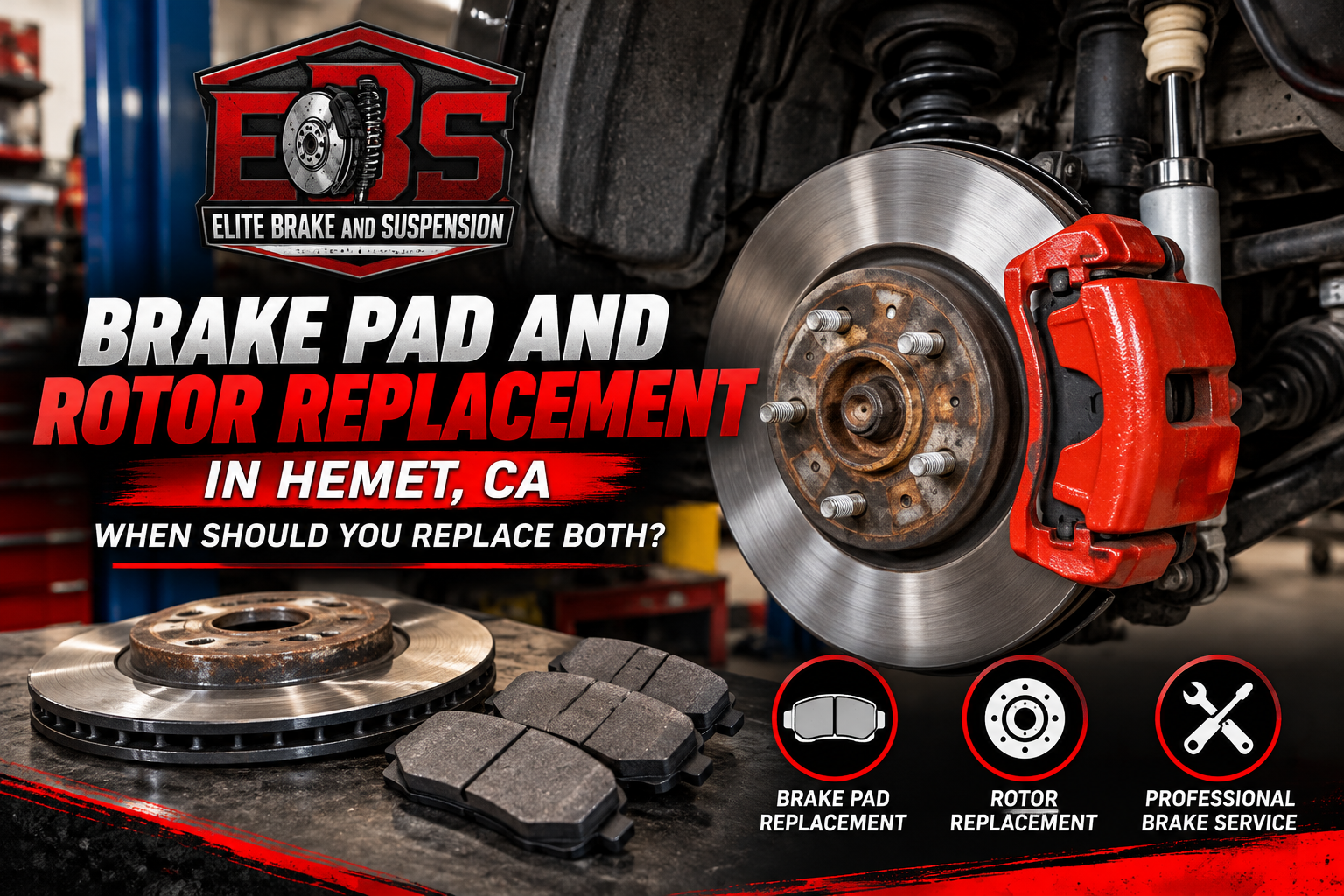
Your vehicle's braking system plays an essential role in keeping you safe on the road. When brake pads begin wearing down or rotors develop damage, you may notice unusual noises, vibrations, or reduced braking performance. Knowing when to replace these components can help prevent unnecessary expenses and more serious mechanical problems. For drivers looking for reliable brake repair and maintenance services in Hemet, CA, understanding the relationship between brake pads and rotors is an important first step toward maintaining a dependable braking system.
Brake pads and rotors work together every time you slow down or stop. Although both components experience wear, they do not always need replacement at the same time. Their condition depends on driving habits, mileage, vehicle type, maintenance history, and the amount of heat generated during braking.
Whether you commute through Hemet, travel along Highway 74, or regularly drive in stop-and-go traffic, recognizing the signs of brake wear can help you make better maintenance decisions.
Understanding How Brake Pads and Rotors Work Together
Brake pads and rotors are essential components of a disc braking system. When you press the brake pedal, hydraulic pressure causes the brake caliper to press the brake pads against the rotating brake rotor. The friction generated between these components slows the wheels and helps bring the vehicle to a stop.
Brake pads contain friction material designed to withstand repeated braking. Over time, this material gradually wears away and must be replaced.
Brake rotors are metal discs attached to the wheel hubs. They provide the surface against which the brake pads press. Although rotors generally last longer than brake pads, they can develop grooves, uneven wear, excessive thickness variation, corrosion, or heat-related damage.
Because both components work together, replacing worn brake pads without inspecting the rotors may leave an underlying braking problem unresolved.
When Should You Replace Your Brake Pads?
Brake pads are designed to wear gradually, but their lifespan varies significantly depending on how and where you drive.
Frequent braking in city traffic, aggressive driving, heavy vehicle loads, and repeated downhill driving can accelerate brake pad wear. Vehicles used primarily for highway travel may experience different wear patterns.
Squealing or Squeaking When Braking
A high-pitched squealing sound is one of the most common signs that your brake pads need attention.
Many brake pads include metal wear indicators that produce a squealing noise when the friction material becomes thin. However, brake noise can also result from moisture, dust, vibration, or other brake system conditions.
If the sound continues or becomes more noticeable, a professional brake inspection can help identify the cause.
Grinding Noises During Braking
Grinding noises may indicate that the brake pad friction material has worn away, allowing metal components to contact the rotor.
This can damage the rotor surface and potentially increase repair costs.
Grinding should never be ignored. If your vehicle develops persistent grinding or noticeably reduced braking performance, have the braking system inspected promptly.
Reduced Braking Performance
If your vehicle takes longer to stop than usual, worn brake pads may be one possible cause.
Other issues, including brake fluid problems, caliper malfunctions, or hydraulic system faults, can also affect stopping performance.
Because reduced braking ability can create a serious safety concern, professional diagnosis is important.
Thin Brake Pad Material
A technician can measure the remaining brake pad friction material to determine whether replacement is necessary.
Many vehicles require attention when the friction material approaches approximately 3 millimeters, although the correct replacement threshold depends on the vehicle manufacturer's specifications and brake condition.
A professional inspection helps determine whether the pads are approaching their service limit.
When Do Brake Rotors Need Replacement?
Brake rotors experience significant friction and heat during normal driving. Over time, repeated braking can affect their thickness, surface condition, and overall performance.
Unlike brake pads, rotors do not have a universal replacement interval. Their condition must be evaluated through inspection and measurement.
Deep Grooves or Surface Damage
Brake rotors should provide an appropriate friction surface for the brake pads.
Deep grooves, severe scoring, or other visible damage may indicate excessive wear or contact with damaged brake components.
Minor surface marks do not automatically mean replacement is necessary. However, significant damage should be evaluated by a qualified technician.
Vibrations When Applying the Brakes
If you feel pulsation through the brake pedal or shaking while braking, uneven rotor thickness or rotor runout may be contributing to the problem.
Other mechanical conditions can produce similar symptoms, so proper diagnosis is important before replacing parts.
Rotors Below Minimum Thickness
Every brake rotor has a specified minimum allowable thickness.
As rotors wear, they become thinner. Once a rotor reaches or falls below its minimum thickness specification, it must be replaced rather than resurfaced.
A technician uses appropriate measuring equipment to determine whether the rotor remains within safe operating limits.
Heat Damage or Severe Corrosion
Repeated heavy braking can expose rotors to high temperatures. Excessive heat may contribute to surface damage, thickness variation, or other performance issues.
Severe corrosion can also affect the rotor's usable braking surface.
If damage cannot be corrected within the manufacturer's specifications, rotor replacement may be necessary.
Should Brake Pads and Rotors Be Replaced Together?
This is one of the most common questions drivers ask when scheduling brake pad and rotor replacement in Hemet, CA.
The answer depends on the condition of both components.
If the brake pads are worn but the rotors remain within manufacturer specifications, have an acceptable surface condition, and are compatible with the new pads, rotor replacement may not be necessary.
However, replacing both brake pads and rotors may be appropriate when the rotors are excessively worn, damaged, below minimum thickness, or otherwise unsuitable for continued use.
When Replacing Brake Pads Alone Makes Sense
Brake pad replacement without rotor replacement may be appropriate when the rotors are in good condition.
A technician should inspect rotor thickness, surface condition, runout, and other relevant factors before recommending this option.
Replacing only the necessary components can help avoid unnecessary repair expenses while maintaining proper braking performance.
When Replacing Both Is the Better Option
Replacing brake pads and rotors together is often recommended when rotor damage or wear prevents proper operation with new pads.
For example, installing new brake pads against severely scored or excessively worn rotors can contribute to noise, uneven pad contact, and reduced braking quality.
Brake pads are generally replaced in axle pairs, and rotors should also be replaced in axle pairs when replacement is required to maintain balanced braking characteristics.
Why Professional Brake Diagnosis Matters
Brake problems are not always caused by the pads or rotors alone. Sticking calipers, damaged hardware, or other system faults can contribute to premature wear.
An experienced technician can identify the actual cause before recommending repairs.
Drivers experiencing squealing, grinding, vibrations, or changes in stopping performance can also learn about the warning signs that indicate a vehicle needs a brake job. Recognizing these symptoms early may help prevent damage to additional braking components.
How Driving Conditions in Hemet, CA Affect Brake Wear
Driving conditions can significantly influence how quickly brake pads and rotors wear.
Hemet drivers encounter a combination of city traffic, warm weather, highway travel, and routes with elevation changes. These conditions can affect braking demands.
Stop-and-Go Traffic
Frequent stopping requires repeated contact between brake pads and rotors.
Drivers who spend considerable time in city traffic may experience faster brake pad wear than drivers who travel primarily on open highways.
Hot Weather and Brake Temperatures
Braking naturally produces heat, regardless of the outside temperature.
Heavy braking, repeated stops, and extended downhill driving can generate substantial heat within the braking system.
Excessive heat can affect friction performance and contribute to brake component wear.
Downhill Driving and Heavy Loads
Driving downhill requires the braking system to manage additional energy, especially when carrying passengers, cargo, or towing within the vehicle's rated capacity.
Using appropriate gears and following manufacturer recommendations can help manage braking demands during downhill travel.
For local drivers experiencing unusual brake noises or reduced stopping performance, professional brake inspection and repair in Hemet, CA can help determine whether the brake pads, rotors, or other components need attention.
What Happens During a Professional Brake Inspection?
A complete brake inspection involves more than checking whether the brake pads look worn.
Technicians examine the braking system to identify wear, damage, and potential mechanical problems.
Brake Pad Inspection
The technician measures the remaining friction material and checks for uneven wear patterns.
Uneven pad wear may indicate problems with caliper movement, slide pins, brake hardware, or other components.
Rotor Inspection and Measurement
Brake rotors are examined for surface damage, corrosion, thickness variation, and other issues.
Rotor thickness is measured and compared with the manufacturer's specifications.
Caliper and Hardware Inspection
Brake calipers and associated hardware are checked for proper operation.
A sticking caliper can cause excessive heat, uneven pad wear, and premature rotor damage.
Brake Fluid and Hydraulic System Check
Brake fluid condition and hydraulic components may also be inspected.
Leaks, damaged brake hoses, or hydraulic system problems can affect braking performance and require professional attention.
A thorough inspection helps ensure that the recommended repairs address the actual problem rather than simply replacing parts based on symptoms.
How Much Does Brake Pad and Rotor Replacement Cost in Hemet, CA?
The cost of brake pad and rotor replacement varies depending on the vehicle and the work required.
Several factors can influence the final repair estimate.
Vehicle Make and Model
Different vehicles use different brake components.
Larger vehicles, performance models, and vehicles with specialized braking systems may require more expensive parts or additional labor.
Brake Pad Material
Brake pads are available in different friction material formulations, including ceramic, semi-metallic, and organic compounds.
The correct choice depends on the vehicle manufacturer's specifications and intended operating conditions.
Rotor Condition and Replacement Requirements
Replacing brake pads alone generally involves fewer parts than replacing pads and rotors together.
However, rotor replacement may be necessary when the existing rotors are damaged or no longer meet service specifications.
Additional Brake System Repairs
If the inspection identifies damaged calipers, worn hardware, leaking brake lines, or other problems, these repairs may affect the total cost.
The most reliable way to understand the expense is to request an inspection and a detailed estimate based on your vehicle's actual condition.
Can You Replace Brake Pads Without Replacing Rotors?
Yes, in many situations brake pads can be replaced without replacing the rotors.
However, this decision should never be based on appearance alone.
A rotor may look acceptable while still having excessive thickness variation or other issues that require attention.
Likewise, minor surface marks do not necessarily mean a rotor needs replacement.
A professional technician can evaluate whether the existing rotors can continue operating safely with new brake pads.
The goal should always be to maintain proper braking performance while avoiding unnecessary component replacement.
How to Extend the Life of Your Brake Pads and Rotors
Although brake components eventually wear out, proper driving habits and maintenance can help reduce unnecessary wear.
Avoid Unnecessary Hard Braking
Maintaining a safe following distance allows more time to slow down gradually.
Frequent aggressive braking can generate additional heat and increase brake wear.
Pay Attention to Unusual Noises
Squealing, grinding, or other unfamiliar brake noises should be investigated.
Addressing developing problems early may help prevent damage to additional components.
Follow Recommended Maintenance Intervals
Your vehicle manufacturer's maintenance schedule provides guidance on brake inspections and other service requirements.
Regular inspections can identify worn pads, damaged rotors, or developing hydraulic problems.
Don't Ignore Changes in Braking Feel
A soft brake pedal, unusual vibration, pulling during braking, or reduced stopping performance may indicate a problem requiring professional attention.
If braking performance is seriously compromised, avoid driving the vehicle until it has been assessed.
Consistent maintenance is especially important because regular brake and suspension inspections can identify developing problems before they lead to more extensive repairs.
Why Choose Elite Brake & Suspension for Brake Services in Hemet, CA?
Finding a dependable brake shop in Hemet, CA, means choosing technicians who understand how the entire braking system works.
Elite Brake & Suspension is a family-owned auto repair business serving Hemet and nearby communities. The shop provides brake inspections, brake pad replacement, rotor services, caliper repairs, and other mechanical work.
Rather than recommending replacement based on mileage alone, a proper brake inspection helps determine which components actually require attention.
Whether your vehicle needs new brake pads, rotor replacement, or diagnosis of unusual braking symptoms, accurate inspection and appropriate repairs are essential for dependable performance.
Drivers searching for brake service in Hemet, CA, can benefit from having the braking system evaluated before minor wear develops into a more complicated repair.
Final Thoughts
Brake pads and rotors work together, but they do not always need replacement at the same time.
Brake pads typically wear faster, while rotors may remain serviceable through multiple pad replacements depending on their condition, thickness, and manufacturer specifications.
However, damaged or excessively worn rotors should not be reused simply to reduce immediate repair costs.
If you notice squealing, grinding, vibrations, or changes in stopping performance, professional inspection can help identify the correct repair.
For dependable brake pad and rotor replacement in Hemet, CA, Elite Brake & Suspension offers brake system diagnostics and repair services to help local drivers maintain reliable braking performance.
Frequently Asked Questions
Do I need to replace rotors every time I replace brake pads?
No. Rotors do not always need replacement with every set of brake pads. Their thickness, surface condition, and manufacturer specifications determine whether they can remain in service.
How do I know if my brake rotors are bad?
Common warning signs include brake pedal pulsation, unusual vibrations, deep rotor scoring, and excessive wear. A professional inspection is necessary to confirm the cause.
Can new brake pads damage old rotors?
New brake pads do not automatically damage older rotors. However, installing them on damaged or unsuitable rotor surfaces may cause noise, uneven contact, or premature wear.
How long do brake pads and rotors last?
Brake pad and rotor lifespan varies depending on vehicle design, driving habits, road conditions, and maintenance. Regular inspections are more reliable than relying on a single mileage estimate.
Is it better to replace brake pads and rotors together?
Replacing both can be beneficial when the rotors are worn or damaged. If the rotors meet all applicable specifications, replacing only the brake pads may be appropriate.
Where can I get brake pad and rotor replacement in Hemet, CA?
Elite Brake & Suspension provides brake inspection and repair services in Hemet, including brake pad and rotor work, caliper services, and related brake system diagnostics.