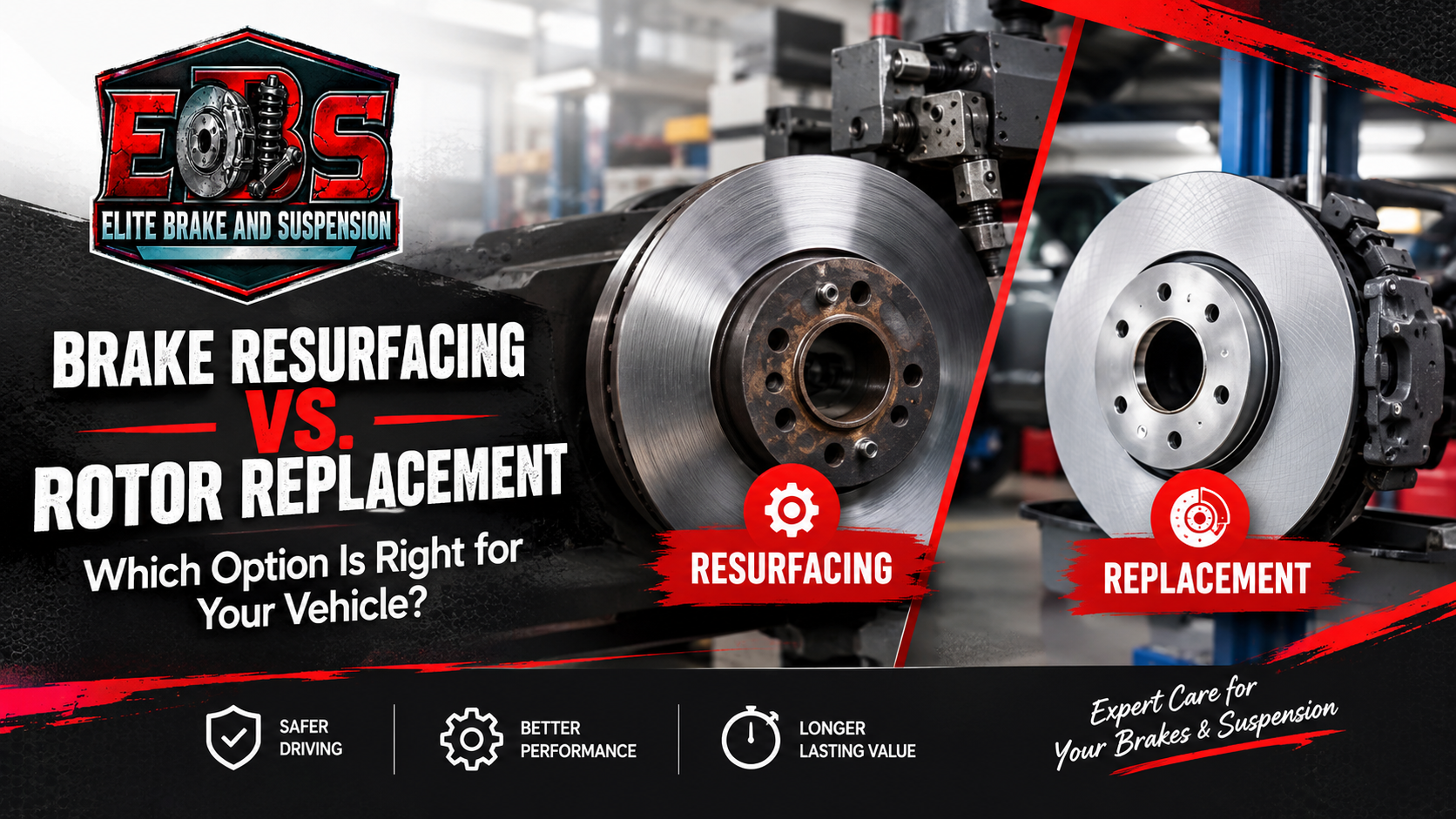
Your vehicle’s brake rotors play an essential role in helping you slow down and stop safely. Over time, these components can develop grooves, uneven surfaces, or excessive wear that affects braking performance. If you notice vibration when braking or hear unusual noises, it may be time to have your braking system inspected. At Elite Brake & Suspension, drivers in Hemet, CA, can get professional brake inspections to determine whether rotor resurfacing or replacement is the right solution.
Both options can help address certain rotor problems, but they are not interchangeable. The correct choice depends on the rotor’s condition, thickness, manufacturer specifications, and overall braking performance. Understanding the difference can help you make an informed decision about your next brake repair.
What Is Brake Rotor Resurfacing?
Brake rotor resurfacing is a process that removes a small amount of material from the rotor’s braking surface to restore a smooth, even finish. A technician uses specialized equipment to correct certain surface irregularities when the rotor is still suitable for resurfacing.
Over time, normal braking can create grooves or uneven wear on the rotor surface. In some cases, resurfacing can help restore consistent contact between the rotor and brake pads.
However, resurfacing is not appropriate for every rotor. The component must have enough material remaining to meet the vehicle manufacturer’s minimum thickness specifications after machining. Rotors with cracks, severe damage, or excessive wear generally require replacement.
What Is Brake Rotor Replacement?
Brake rotor replacement involves removing worn or damaged rotors and installing new components that meet the vehicle’s specifications.
Replacement may be necessary when rotors are too thin, cracked, severely scored, or damaged beyond what resurfacing can safely correct. It may also be recommended when the cost or practicality of resurfacing does not make sense for the condition of the rotor.
New rotors provide a fresh braking surface for the brake pads. Depending on the vehicle and repair requirements, technicians may also recommend replacing the brake pads to help ensure proper contact and braking performance.
Key Differences Between Resurfacing and Replacement
Although both options address rotor problems, they differ in several important ways.
1. Rotor Condition
Resurfacing is generally considered when the rotor has minor surface irregularities and remains within the manufacturer’s thickness limits. Replacement is usually necessary when the rotor has structural damage, excessive wear, or insufficient material remaining.
A visual inspection alone may not be enough to make this decision. A technician may need to measure rotor thickness and check for runout, cracks, and other signs of damage.
2. Repair Cost
Resurfacing can sometimes cost less than replacement because it works with the existing rotor rather than installing a new one. However, the total cost depends on labor, equipment, rotor condition, and the vehicle’s specifications.
Replacement may have a higher initial parts cost, but it can be the more practical option when the existing rotors are near the end of their service life. The cheapest option is not always the safest or most economical over time.
3. Long-Term Performance
A properly resurfaced rotor that meets all manufacturer requirements can provide reliable braking performance. However, resurfacing removes material, leaving less thickness available for future wear.
New rotors provide a new braking surface and may be a better choice when the existing components have significant wear. The expected lifespan of either option depends on driving habits, brake pad condition, vehicle weight, road conditions, and maintenance.
4. Safety Requirements
Safety should always guide the repair decision. A rotor must remain within the manufacturer’s minimum thickness specifications and be free of damage that could compromise its integrity.
If a rotor cannot safely be resurfaced, replacing it is the appropriate solution. A qualified technician can inspect the braking system and explain which option is suitable for your vehicle.
Signs Your Brake Rotors May Need Attention
Brake rotor problems can develop gradually, so it is important to recognize changes in how your vehicle behaves.
- Steering wheel vibration while braking: This can indicate rotor thickness variation, runout, or another brake or suspension issue.
- Brake pedal pulsation: A pulsing sensation during braking may suggest uneven rotor surfaces or other braking system problems.
- Grooves or visible scoring: Deep grooves can indicate wear or damage that needs professional evaluation.
- Squealing or grinding noises: These sounds may come from worn brake pads or other components contacting the rotor.
- Reduced braking performance: Longer stopping distances or inconsistent braking should be inspected promptly.
- Visible cracks or severe damage: Cracked or structurally damaged rotors generally require replacement.
These symptoms do not always mean the rotors are the problem. Brake pads, calipers, wheel bearings, tires, and suspension components can also contribute to some of these issues.
Can Brake Rotors Be Resurfaced Every Time?
No. Resurfacing is only appropriate when the rotor’s condition and remaining thickness allow it.
Every time a rotor is resurfaced, a small amount of metal is removed. If the rotor is already close to its minimum thickness, machining may leave it outside the manufacturer’s safe operating specifications.
Other conditions, including cracks, severe heat damage, and excessive scoring, can also make resurfacing unsuitable.
A professional inspection helps determine whether resurfacing is a safe option or whether replacement is needed. The decision should be based on measurements, the rotor’s condition, and the vehicle manufacturer’s requirements rather than appearance alone.
What Happens If You Ignore Worn Brake Rotors?
Driving with damaged or excessively worn rotors can affect braking performance and may allow a relatively small issue to become a more serious repair.
Depending on the underlying problem, worn rotors can contribute to vibration, noise, uneven brake pad wear, and inconsistent stopping. Severe rotor damage can compromise safe braking.
If you notice unusual brake noises, vibration, or a change in stopping performance, arrange an inspection as soon as possible. If braking ability is significantly reduced or you suspect a serious brake problem, avoid driving the vehicle and arrange appropriate assistance.
Regular brake inspections can help identify wear before it develops into a larger concern.
How to Choose the Right Option for Your Vehicle
The best solution depends on the condition of your braking system rather than a one-size-fits-all rule.
- Resurfacing may be suitable when surface irregularities are minor, the rotor is structurally sound, and sufficient thickness will remain after machining.
- Replacement may be necessary when the rotor is cracked, too thin, severely damaged, or outside manufacturer specifications.
- A complete brake inspection is important when the cause of vibration, noise, or uneven braking is unclear.
A technician should also inspect the brake pads and related components. Installing new rotors without addressing an underlying caliper or brake pad problem may not resolve the original concern.
Drivers looking for a reliable auto repair shop in Hemet, CA can arrange a professional diagnosis to help identify the cause of brake problems and determine the appropriate repair.
Why Professional Brake Inspection Matters
Brake systems rely on several components working together correctly. Rotor condition is only one part of the overall picture.
During an inspection, a technician can assess rotor thickness, surface condition, brake pad wear, caliper operation, and other relevant components. These checks help determine whether resurfacing is appropriate or replacement is the safer choice.
Professional evaluation also helps avoid unnecessary repairs. Rather than replacing parts based only on symptoms, the goal is to identify the underlying problem and recommend a solution that meets the vehicle’s requirements.
To learn more about available repair options, explore Elite Brake & Suspension’s brake and auto repair services.
Conclusion
Choosing between brake resurfacing and rotor replacement depends on the rotor’s condition, remaining thickness, and the manufacturer’s specifications. Resurfacing may be suitable for certain minor surface issues, while cracked, excessively worn, or severely damaged rotors generally need replacement.
Ignoring brake problems can affect vehicle safety and lead to additional damage. If your vehicle vibrates while braking, makes unusual noises, or does not stop as smoothly as it should, schedule a professional inspection to determine the cause.
For more information about rotor wear, read our related guide on how heat and repeated braking affect rotors and drums.
Elite Brake & Suspension provides brake and auto repair services for drivers in Hemet, CA, and surrounding communities. Contact the team to have your braking system inspected and find out which repair option is right for your vehicle.
Frequently Asked Questions
Is brake resurfacing better than rotor replacement?
Neither option is always better. Resurfacing can be suitable for rotors with minor surface issues that meet thickness and condition requirements. Replacement is necessary when rotors are too thin, cracked, or excessively damaged.
Does resurfacing brake rotors save money?
It can sometimes cost less than replacement, but savings depend on the rotor’s condition and the cost of labor. Resurfacing is not suitable if the rotor cannot safely meet manufacturer specifications afterward.
How do I know if my rotors need replacement?
Warning signs may include braking vibration, deep grooves, unusual noises, or visible cracks. A technician should measure the rotor and inspect it to determine whether replacement is required.
Can I drive with warped or damaged brake rotors?
Brake vibration or other rotor symptoms should be inspected promptly because they can affect braking performance. If the brakes are seriously compromised, avoid driving and arrange professional assistance.
Where can I get brake resurfacing near Hemet, CA?
Elite Brake & Suspension serves drivers in Hemet and nearby communities. Contact the shop to arrange a brake inspection and determine whether resurfacing or rotor replacement is appropriate for your vehicle.